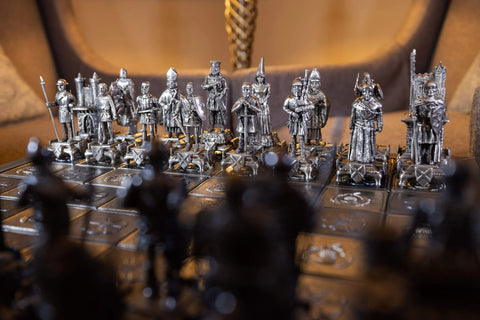
The Lineage of Legends: A Timeline

700 Years of the Scottish Spirit
The story of our collection spans seven centuries. Use this timeline to see how each figure represents a different chapter in the forging of the Scottish identity.
1297
The Spark of Resistance: William Wallace
The saga begins not with a king, but with a Guardian. At the Battle of Stirling Bridge, Sir William Wallace proved that a citizen army, fueled by a thirst for liberty, could dismantle the "invincible" English heavy cavalry. Wallace utilized the narrow bottleneck of the bridge to trap the overconfident English forces, securing a victory that sent shockwaves through Europe. This was the moment the Scottish identity was forged in defiance, proving that the common man’s resolve was a match for the armor of a knight.
1305
The Price of Loyalty: The Martyrdom
Wallace’s betrayal by Sir John de Menteith and his subsequent execution in London was intended to be a final, crushing blow to the Scottish spirit. Edward, I ordered Wallace to be hanged, drawn, and quartered, with his limbs sent to the four corners of Britain as a warning. Instead, the move backfired spectacularly. Wallace’s death transformed him from a rebel leader into an immortal martyr. His sacrifice provided the moral fuel and the righteous fury that would unite the clans for the next chapter of the struggle.
1314
The Architect of Independence: Robert the Bruce
Picking up the mantle of the Guardian, Robert the Bruce spent years as an outlaw before transforming a fractured nation into a sovereign power. His tactical masterpiece at the Bannock Burn saw a vastly outnumbered Scottish force use "schiltron" pike formations to break the back of the English cavalry. This remains the most significant military triumph in Scottish history, securing Bruce’s throne and proving that Scotland would no longer be a province of its southern neighbour, but a kingdom in its own right.
1320
The Declaration of Arbroath
Six years after the blood-soaked fields of Bannockburn, the Scottish nobility sent a letter to Pope John XXII that would echo through the ages. The Declaration of Arbroath is one of the most eloquent defences of national sovereignty ever written. It famously asserted that the King serves the people, not the other way around, setting a global precedent for democracy. It stated with iron-clad conviction: "It is in truth not for glory, nor riches, nor honours that we are fighting, but for freedom — for that alone, which no honest man gives up but with life itself."
1603
The Union of the Crowns
A pivotal shift in the lineage occurred when Queen Elizabeth I died childless, and James VI of Scotland travelled south to become James I of England. While the two crowns were joined on one head, the distinct cultural identity of the Scots remained fiercely independent. This era was defined by a tension between the new "British" political reality and the deep-rooted Scottish heritage. The music, the dress, and the Presbyterian spirit remained separate and defiant, ensuring that the soul of the North would not be swallowed by the South.
1720
The Prince Over the Water: Bonnie Prince Charlie
Born in the gilded palaces of Rome, Charles Edward Stuart was raised on stories of the kingdom his grandfather had lost. Known as the "Young Pretender," he represented the romantic hope of the Jacobite cause. To the clans in the Highlands, he was the "Prince over the Water," the legitimate heir whose return would restore the honour of the Stuart line. His birth reignited the flickering flame of Jacobitism, setting the stage for a daring, high-stakes attempt to reclaim the ancestral throne.
1745
The Jacobite Whirlwind
With only seven companions—the "Seven Men of Moidart"—Bonnie Prince Charlie landed on Scottish soil and raised the standard at Glenfinnan. What followed was a lightning campaign that saw the Highland Clans capture Edinburgh and march deep into England, reaching as far south as Derby. This represents the peak of Highland military glory; for a few weeks, the British establishment was paralysed with fear as the "kilted savages" threatened the very gates of London, nearly changing the course of world history forever.
1746
The Instrument of War: The Scottish Piper
After the tragic defeat at Culloden, the British government sought to dismantle Highland culture entirely through the Act of Proscription. They classified the bagpipes as an "instrument of war," making it a capital offence to play them. This legal move backfired, turning the Piper into a symbol of cultural survival. The piper didn't just play music; he carried the morale of a suppressed nation. In the glens and on the battlefields of the British Empire, the "skirl" of the pipes became the defiant heartbeat of a people who refused to be silenced.
1759
The Birth of the National Bard: Robert Burns
As the era of the sword faded, the era of the pen began. Born into the back-breaking poverty of a tenant farm in Alloway, Robert Burns became the "Ploughman Poet." He possessed a "heaven-taught" genius that allowed him to capture the human condition in the Scots language. At a time when the vernacular was being mocked, Burns proved it was a vehicle for world-class literature. He championed the dignity of the common man over the empty titles of the aristocracy, giving the Scottish people a new kind of power: a cultural voice.
1788
The Gift of Auld Lang Syne
In the twilight of his short life, Robert Burns refined an ancient fragment of folk music into the version of Auld Lang Syne we know today. He claimed he took the words down from "an old man's singing," but his lyrical "mending" turned it into a diamond. He gave the world a universal anthem of memory, friendship, and the "cup o' kindness." This song became the bridge between the old Scotland of clan warfare and a new era of global fellowship, ensuring that "days gone by" would always be honoured.
1801
The First Burns Supper: The Global Legacy
Five years after the Bard's death, a small group of his friends gathered at his birthplace to celebrate his life and works. They could not have known they were starting a movement. That first "Burns Night" blossomed into a worldwide tradition that now sees millions of people gather every January 25th. From Tokyo to Toronto, the Scottish spirit is celebrated through haggis, whisky, and poetry. This final date in our timeline proves that while the men may pass, the legend is immortal—and the story is now yours to carry forward.
Explore our products
Sold out
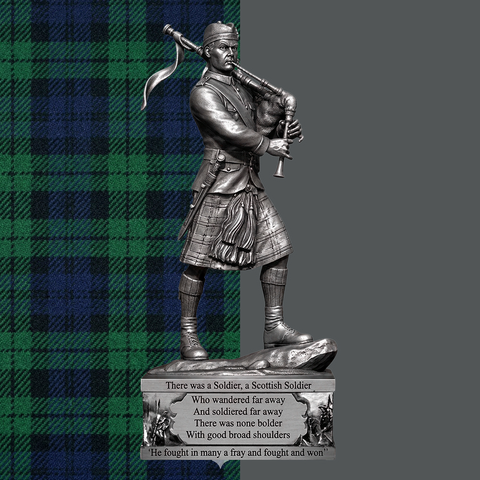
The Scottish Piper
Price£225.00
Sold out
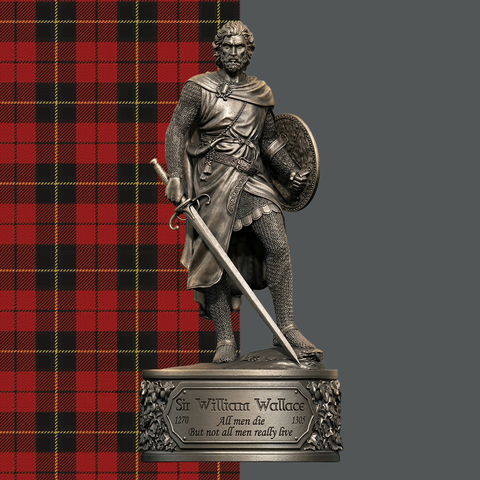
Sir William Wallace
Price£225.00
Sold out
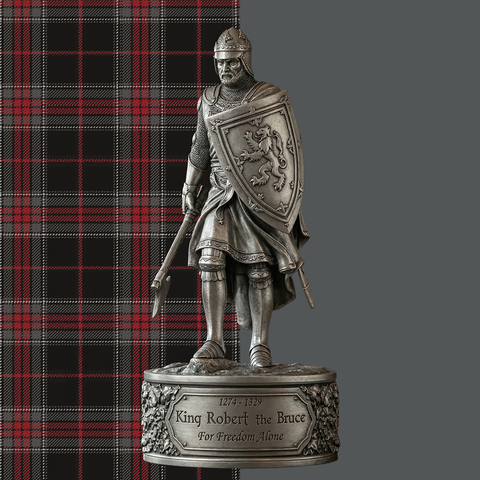
Robert the Bruce
Price£225.00
Sold out

Robert Burns
Price£225.00
Sold out
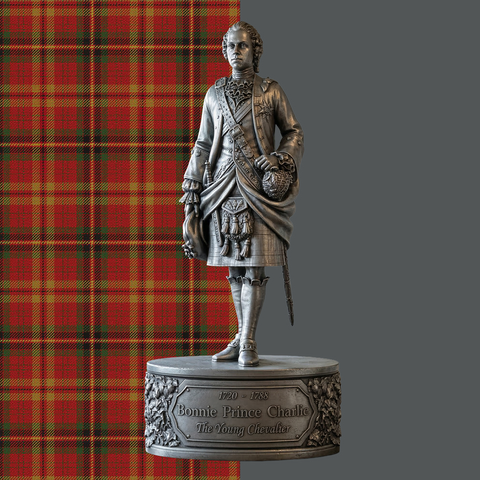
Bonnie Prince Charlie
Price£225.00
Sold out
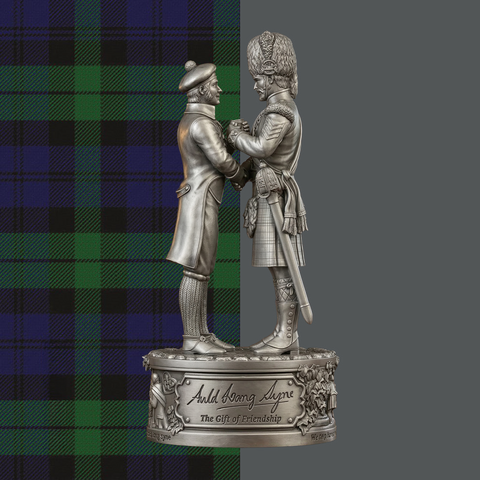
Auld Lang Syne
Price£225.00
A Heritage Restored:
The Stirling 1314 Collection